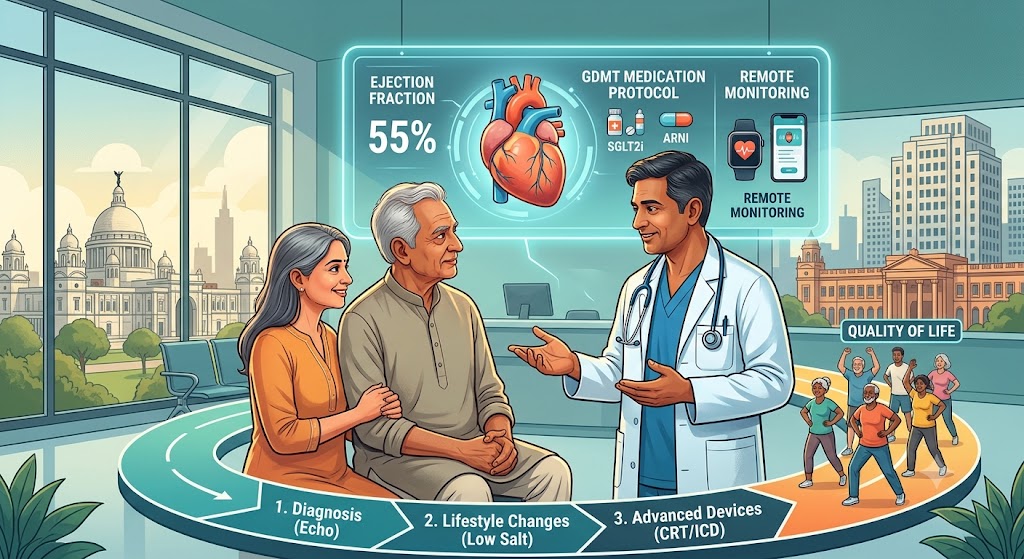
Best Heart Failure Treatment & Management in Kolkata (2026)
The Path to a Healthier Heart: Best Heart Failure Treatment & Management in Kolkata (2026)
Imagine your heart as a beautiful, tireless engine. It beats over 100,000 times a day, pumping life through your body. But just like any engine, it sometimes needs a bit of expert care, tuning, or repair. For decades, hearing the phrase “heart failure” from a doctor could trigger immense anxiety—visions of sudden stops, prolonged hospitalizations, and a loss of personal freedom.
Medical technology in 2026 has completely transformed that reality. In Kolkata, a city globally recognized for its deep cultural roots and rapidly advancing medical infrastructure, a massive healthcare revolution is taking place. Heart failure does not mean your heart has suddenly stopped working or is about to stop completely. Instead, it is a medical term indicating that your heart muscle is not pumping blood as efficiently as your body needs it to.
Under the expert guidance of leading specialists like Dr. Ayan Kar, a weakened heart has become a highly manageable condition. With the right comprehensive care protocols, advanced medical therapies, and daily lifestyle management strategies, patients can significantly improve their heart’s function, relieve their symptoms, and get back to living active, fulfilling lives.
This comprehensive guide serves as your complete guide to how heart failure is diagnosed, treated, and managed in Kolkata in 2026, empowering you and your family with the knowledge to take control of your cardiovascular health.
1. What is Heart Failure? (Simplifying the Diagnosis)
To understand modern treatment approaches, it is helpful to first understand how the heart works. The heart is a muscular pump. Its primary job is to receive oxygen-depleted blood from the body, send it to the lungs for fresh oxygen, and then pump that oxygen-rich blood back out to nourish your brain, organs, and tissues.
Heart failure occurs when the heart muscle becomes weakened or stiffened over time. Because the pump is struggling to keep up with the body’s demand, blood can begin to back up in the system.
Congestive Heart Failure (CHF)
When the heart’s pumping power drops, fluid can leak into the lungs (causing shortness of breath) and into the body’s tissues (causing swelling in the legs, ankles, and abdomen). This fluid buildup is referred to as “congestion,” which is why you will often hear the condition called Congestive Heart Failure (CHF).
The Importance of Ejection Fraction (EF)
During your consultation, your cardiologist will likely discuss a metric called your Ejection Fraction (EF). This is a vital percentage that measures how much blood the left ventricle (the main pumping chamber) pushes out with each heartbeat.
-
Normal EF: 50% to 70% (The heart never pumps out 100% of its blood).
-
Borderline EF: 41% to 49%.
-
Reduced EF: 40% or less.
Identifying your exact Ejection Fraction allows doctors to categorize your condition as either Heart Failure with Reduced Ejection Fraction (HFrEF) (weakened muscle) or Heart Failure with Preserved Ejection Fraction (HFpEF) (stiffened muscle). The treatment for each is unique, which is why personalized care is so critical.
2. Why Choose Specialized Management for Heart Failure?
Managing heart failure is not a one-size-fits-all process. It requires a dedicated partnership between the patient and their cardiologist. Leading clinics in Kolkata bring years of specialized experience to the table, offering a structured, empathetic, and highly advanced approach to cardiac care.
When you undergo advanced heart failure management, modern medical facilities focus on three primary goals:
-
Rapid Symptom Relief: Aggressively treating shortness of breath, fatigue, and swelling so you feel better immediately.
-
Halt Disease Progression: Utilizing the latest medical therapies to prevent the heart muscle from weakening further, and in many cases, actually reversing the damage and improving the Ejection Fraction.
-
Long-Term Quality of Life: Equipping you with the lifestyle tools and remote monitoring strategies to keep you healthy, active, and out of the hospital.
3. Comprehensive Diagnostic Protocols
Accurate treatment begins with an accurate diagnosis. Before prescribing any medication, your cardiologist will conduct a thorough investigation to understand exactly why your heart is struggling. Root causes can range from past heart attacks and high blood pressure to diabetes, leaky heart valves, or viral infections.
Kolkata’s top clinics utilize state-of-the-art diagnostic testing, which may include:
4. Step-by-Step Medical Therapies (The Medications)
Modern medicine has revolutionized heart failure treatment. Specialists in Kolkata utilize a globally recognized protocol known as Guideline-Directed Medical Therapy (GDMT). This involves carefully combining specific classes of medications that work together synergistically to take the stress off your heart and help it heal.
We do not just treat the symptoms; we treat the underlying mechanics of the heart. Here are the core pillars of our pharmaceutical approach:
ARNI / ACE Inhibitors / ARBs
-
The Magic of Blockade: Medications like Sacubitril/Valsartan (ARNI) block harmful hormones that cause blood vessels to narrow. By widening the vessels, they make it incredibly easy for a weakened heart to pump blood forward.
-
Why it matters: These are considered foundational medications that have been proven to prolong life and drastically reduce the risk of future hospitalizations.
Beta-Blockers
-
Slowing Down to Strengthen: It sounds counterintuitive, but a failing heart often pumps too fast as it panics. Beta-blockers slow down the heart rate and lower blood pressure.
-
Why it matters: This allows the heart muscle more time to relax between beats, resting the pump and letting it fill with more blood, which gradually builds back its long-term strength.
Mineralocorticoid Receptor Antagonists (MRAs)
-
Preventing Internal Scarring: Medications like Spironolactone act as mild diuretics but serve a dual purpose. They prevent the body from holding onto toxic levels of aldosterone.
-
Why it matters: They actively stop the heart muscle from building up stiff scar tissue (fibrosis), helping it maintain its natural elasticity.
SGLT2 Inhibitors
-
The New Frontier: Originally designed as diabetes medications, extensive trials have shown that drugs like Empagliflozin or Dapagliflozin work absolute wonders for heart failure—even if the patient does not have diabetes.
-
Why it matters: They help the kidneys flush out excess sodium and fluid while optimizing how the heart muscle burns energy.
Diuretics (Water Pills)
-
The Fluid Flushers: When congestion hits, diuretics are deployed to increase urination, quickly removing excess fluid from the lungs and legs.
-
Why it matters: While they do not change the long-term strength of the heart, they provide instantaneous relief from breathlessness.
5. Advanced Cardiac Device Implantation in 2026
When medications alone are not enough to restore the heart’s natural efficiency, Kolkata’s top cardiac centers step in with next-generation device management.
Cardiac Resynchronization Therapy (CRT)
-
What it is: In many heart failure patients, the left and right sides of the heart do not beat at the same time. A CRT device (often called a biventricular pacemaker) corrects this mistiming.
-
How it works: A tiny computer is implanted under the skin, with wires running down into both ventricles. It sends perfectly timed microscopic electrical pulses to ensure both sides of the heart contract in perfect harmony.
-
Why it matters: Resynchronizing the beat dramatically increases the volume of blood leaving the heart without forcing the muscle to work any harder.
Implantable Cardioverter-Defibrillators (ICD)
-
What it is: A weakened heart is highly susceptible to sudden, dangerously chaotic electrical rhythms. An ICD is a miniature emergency room guardian implanted inside you.
-
How it works: It constantly monitors your heartbeat. If it detects a life-threatening rhythm, it instantly delivers a precise internal electrical shock to reset the heart to normal.
-
Why it matters: It provides 24/7 protection against sudden cardiac arrest, giving patients and their families immense peace of mind.
+-------------------------------------------------------------+
|               TRADITIONAL VS. LEADLESS PACEMAKER            |
+-------------------------------------------------------------+
| Feature             | Traditional Pacemaker | Leadless     |
+---------------------+-----------------------+--------------|
| Size                | Pocket-watch size     | Vitamin cap  |
| Surgical Scar       | Yes (Near collarbone) | None         |
| Wires (Leads)       | Yes (Threaded to heart)| None        |
| Insertion Point     | Upper Chest Incision  | Groin Puncture|
+-------------------------------------------------------------+
6. The Step-by-Step Path to Successful Home Management
The finest hospital care can only go so far; the true battle against heart failure is won through daily habits at home. Top cardiac teams provide step-by-step training for patients to become masters of their own health.
Step 1: The Daily Scale Check
-
What to do: Weigh yourself every single morning after using the bathroom but before eating breakfast. Write the number down in a log.
-
Why it matters: If you gain 1.5 to 2 kg in a single week, it is not fat—it is fluid building up before you can even feel it. Catching this early allows your doctor to adjust your water pill dose over the phone, avoiding an emergency room trip.
Step 2: Strict Sodium Restricting
-
What to do: Limit your daily salt intake to less than 2 grams (about half a teaspoon). Avoid processed foods, pickles, papads, and canned soups.
-
Why it matters: Salt acts like a sponge inside your body, trapping water in your bloodstream and overloading your already tired heart pump.
Step 3: Mindful Fluid Budgeting
-
What to do: Keep a designated water bottle to track exactly how much fluid you consume daily. Remember that tea, coffee, soups, and dals count toward your total liquid allowance.
-
Why it matters: Drinking too much fluid fills up the body’s storage capacity, forcing the fluid back into your lungs and making it difficult to breathe.
Step 4: Paced, Smart Physical Activity
-
What to do: Engage in moderate, doctor-approved exercise, such as a gentle 20-minute evening walk. Never exercise to the point of exhaustion or chest discomfort.
-
Why it matters: Regular movement keeps your leg muscles toned, which actually helps push blood back up to your heart, taking some of the heavy workload off the organ.
7. Choosing the Right Treatment Center in Kolkata
If you are looking for premier heart failure care in the city, ensure the clinic or hospital provides:
-
Multidisciplinary Heart Teams: Facilities where cardiologists, specialized heart failure nurses, dietitians, and physical therapists collaborate on your case.
-
Dedicated Device Clinics: Special departments that can regularly check, program, and remotely monitor your CRT or ICD implants.
-
Advanced Interventional Support: Access to advanced solutions like ECMO or LVAD (Left Ventricular Assist Devices) for advanced stages of heart failure.
Conclusion
A diagnosis of heart failure is the beginning of a new, carefully managed chapter of life—not the end of the book. Thanks to modern innovations, Guideline-Directed Medical Therapy, and intelligent lifestyle monitoring, your heart can be supported, protected, and even strengthened. By partnering with leading experts in Kolkata, you are choosing a path filled with safety, precision, and longevity. Take it one step at a time, trust the science, and give your heart the care it deserves.