Heart Failure Treatment & Management
Comprehensive care and advanced medical strategies to effectively manage weakened heart muscles and congestive heart failure.
Comprehensive Heart Failure Treatment & Management in Kolkata, India
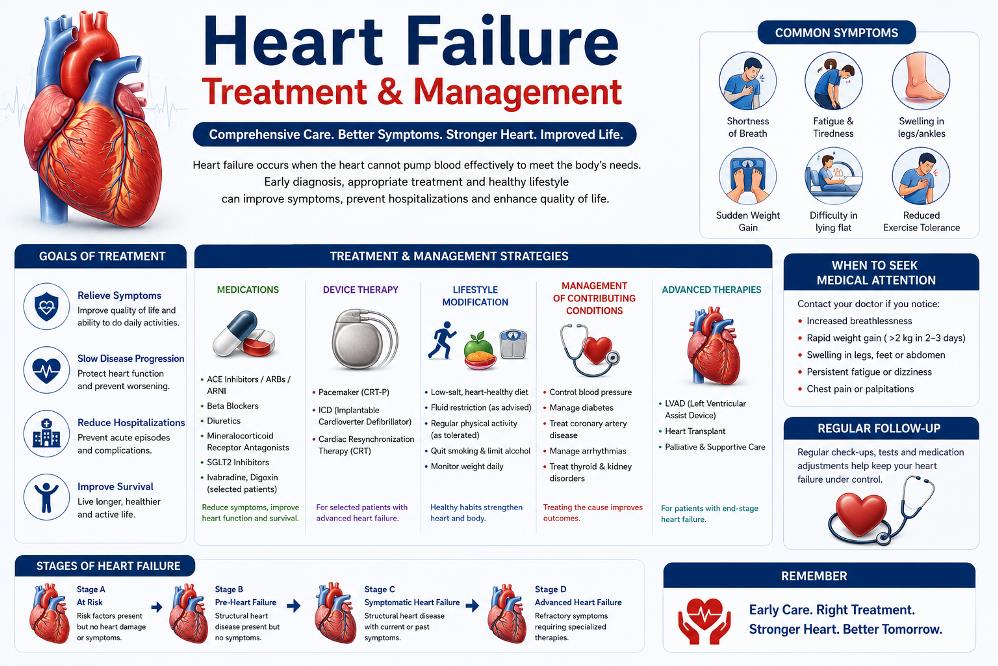
Expert Cardiac Care Led by Dr. Ayan Kar
Hearing the words “heart failure” from a doctor can feel overwhelming and frightening. However, it is crucial to understand that heart failure does not mean your heart has suddenly stopped working or is about to stop completely. Instead, it is a medical term indicating that your heart muscle is not pumping blood as efficiently as your body needs it to.
Under the expert guidance of Dr. Ayan Kar, a weakened heart is a highly manageable condition. With the right comprehensive care protocols, advanced medical therapies, and daily lifestyle management strategies, patients can significantly improve their heart’s function, relieve their symptoms, and get back to living active, fulfilling lives.
This page serves as your complete guide to how Dr. Ayan Kar diagnoses, treats, and manages heart failure, empowering you and your family with the knowledge to take control of your cardiovascular health.
1. What is Heart Failure? (Simplifying the Diagnosis)
To understand our treatment approach, it is helpful to understand how the heart works. The heart is a muscular pump. Its primary job is to receive oxygen-depleted blood from the body, send it to the lungs for fresh oxygen, and then pump that oxygen-rich blood back out to nourish your brain, organs, and tissues.
Heart failure occurs when the heart muscle becomes weakened or stiffened over time. Because the pump is struggling to keep up with the body’s demand, blood can begin to back up in the system.
Congestive Heart Failure (CHF)
When the heart’s pumping power drops, fluid can leak into the lungs (causing shortness of breath) and into the body’s tissues (causing swelling in the legs, ankles, and abdomen). This fluid buildup is referred to as “congestion,” which is why you will often hear the condition called Congestive Heart Failure (CHF).
The Importance of Ejection Fraction (EF)
During your consultation, Dr. Ayan Kar will likely discuss a metric called your Ejection Fraction (EF). This is a vital percentage that measures how much blood the left ventricle (the main pumping chamber) pushes out with each heartbeat.
Normal EF: 50% to 70% (The heart never pumps out 100% of its blood).
Borderline EF: 41% to 49%.
Reduced EF: 40% or less.
Identifying your exact Ejection Fraction allows Dr. Kar to categorize your condition as either Heart Failure with Reduced Ejection Fraction (HFrEF) (weakened muscle) or Heart Failure with Preserved Ejection Fraction (HFpEF) (stiffened muscle). The treatment for each is unique, which is why personalized care is so critical.
2. Why Choose Dr. Ayan Kar for Heart Failure Management?
Managing heart failure is not a one-size-fits-all process. It requires a dedicated partnership between the patient and their cardiologist. Dr. Ayan Kar brings years of specialized experience to the table, offering a structured, empathetic, and highly advanced approach to cardiac care.
When you become a patient, our clinic focuses on three primary goals:
Rapid Symptom Relief: Aggressively treating shortness of breath, fatigue, and swelling so you feel better immediately.
Halt Disease Progression: Utilizing the latest medical therapies to prevent the heart muscle from weakening further, and in many cases, actually reversing the damage and improving the Ejection Fraction.
Long-Term Quality of Life: Equipping you with the lifestyle tools and remote monitoring strategies to keep you healthy, active, and out of the hospital.
3. Comprehensive Diagnostic Protocols
Accurate treatment begins with an accurate diagnosis. Before prescribing any medication, Dr. Ayan Kar will conduct a thorough investigation to understand exactly why your heart is struggling. Root causes can range from past heart attacks and high blood pressure to diabetes, leaky heart valves, or viral infections.
Our clinic utilizes state-of-the-art diagnostic testing, which may include:
| Diagnostic Test | What It Does | Why Dr. Kar Uses It |
|---|---|---|
| Echocardiogram (Echo) | An ultrasound of the heart using sound waves to create moving pictures. | To measure the Ejection Fraction, check valve function, and visualize the heart’s size and pumping action. |
| Electrocardiogram (ECG/EKG) | Measures the electrical activity of the heartbeat. | To detect abnormal heart rhythms (arrhythmias) or signs of a past heart attack. |
| Blood Tests (BNP/NT-proBNP) | Checks for specific proteins released when the heart is stressed. | High levels strongly indicate congestive heart failure and help gauge the severity of fluid buildup. |
| Cardiac Stress Test | Monitors the heart while you walk on a treadmill or take a specific medication. | To see how the heart responds to exertion and check for blockages in the coronary arteries. |
| Cardiac MRI or CT Scan | Advanced imaging techniques. | To look for scar tissue, inflammation, or structural abnormalities in the heart muscle. |
4. Step-by-Step Medical Therapies (The Medications)
Modern medicine has revolutionized heart failure treatment. Dr. Ayan Kar utilizes a globally recognized protocol known as Guideline-Directed Medical Therapy (GDMT). This involves carefully combining specific classes of medications that work together synergistically to take the stress off your heart and help it heal.
We do not just treat the symptoms; we treat the underlying mechanics of the heart. Here are the core pillars of our medical management strategy:
Pillar 1: ACE Inhibitors, ARBs, and ARNIs (The Vessel Relaxers)
When the heart struggles, the body releases hormones that tighten blood vessels to keep blood pressure up. This actually makes the heart work harder.
The Mechanism: These medications block those harmful hormones, allowing your blood vessels to widen and relax. This lowers your blood pressure and drastically reduces the resistance your heart has to pump against.
The Benefit: Newer medications in this class, specifically ARNIs (like Entresto), have shown incredible success in keeping heart failure patients out of the hospital and extending their lifespan.
Pillar 2: Beta-Blockers (The Heart Protectors)
A failing heart tries to compensate by beating faster and harder, driven by adrenaline. Over time, this constant overdrive exhausts the heart muscle.
The Mechanism: Beta-blockers shield the heart from adrenaline. They slow the heart rate down and reduce its workload.
The Benefit: By giving the heart a chance to rest and beat more efficiently, beta-blockers can actually help the heart muscle recover and improve its pumping strength over time.
Pillar 3: Diuretics (Fluid Management)
Congestion (fluid buildup) is the primary cause of shortness of breath and swelling in heart failure patients.
The Mechanism: Diuretics, commonly known as “water pills” (like Lasix or Torsemide), act on the kidneys to pull excess sodium and water out of your bloodstream, converting it into urine.
The Benefit: They provide rapid relief. By draining the excess fluid, the lungs clear up, breathing becomes easier, and the swelling in the legs goes down.
Pillar 4: SGLT2 Inhibitors (The Metabolic Game-Changers)
Originally designed as diabetes medications, SGLT2 inhibitors (like Jardiance or Farxiga) are the latest major breakthrough in heart failure therapy.
The Mechanism: They change the way the heart muscle metabolizes energy, making it function much more efficiently, while also assisting the kidneys in removing excess fluid.
The Benefit: Dr. Ayan Kar prescribes these because clinical trials have proven they dramatically reduce the risk of heart failure hospitalizations and improve survival rates, regardless of whether the patient has diabetes.
Pillar 5: Aldosterone Antagonists (MRAs)
The Mechanism: These are potassium-sparing diuretics that block aldosterone, a hormone that causes the heart muscle to stiffen and develop scar tissue (fibrosis).
The Benefit: They keep the heart muscle pliable and prevent long-term structural damage.
A Note on Medication Adjustments: Dr. Kar will typically start these medications at low doses and gradually increase them over several weeks. This “titration” phase requires close monitoring to ensure your blood pressure and kidneys respond well, ensuring maximum safety and effectiveness.
5. Advanced Medical Devices & Interventions
For some patients, medications alone are not enough to fully manage the condition. If your heart muscle remains severely weakened or if you develop dangerous electrical misfires, Dr. Ayan Kar may recommend the integration of advanced medical devices. These are life-saving technologies designed to protect and assist the heart.
Implantable Cardioverter-Defibrillator (ICD)
A weakened heart is susceptible to sudden, dangerously fast heart rhythms (arrhythmias). An ICD is a small, pacemaker-like device implanted under the skin of the chest. It monitors your heart rhythm 24 hours a day. If it detects a life-threatening rhythm, it instantly delivers an electrical shock to reset the heart to a normal pace, effectively preventing sudden cardiac arrest.
Cardiac Resynchronization Therapy (CRT)
Also known as a biventricular pacemaker. In a healthy heart, the left and right ventricles pump simultaneously. In heart failure, the electrical signals can become delayed, causing the sides to pump out of sync and waste energy. A CRT device sends tiny, painless electrical impulses to both sides of the heart, coordinating their contractions so they pump together in perfect harmony, instantly boosting the heart’s efficiency.
Coronary Interventions
If Dr. Kar determines that your heart failure is being driven by blocked arteries (coronary artery disease), he may recommend an angioplasty or stent placement to open the blockages and restore blood flow to the starving heart muscle.
6. Daily Management Strategies: Empowering the Patient
Medical treatments prescribed by Dr. Ayan Kar represent only one half of the success equation. The other half is driven by you. Heart failure management requires active, daily participation. The lifestyle choices you make at home dictate how well your heart responds to the medications.
Our team will guide you through the following essential daily protocols:
Strict Sodium (Salt) Management
The golden rule of heart failure is: Where sodium goes, water follows. When you consume salt, your body holds onto extra water. For a weakened heart, this extra fluid volume acts like a massive traffic jam, overwhelming the pump and forcing fluid into your lungs and legs.
Your Goal: Limit daily sodium intake to 1,500 to 2,000 milligrams (less than one teaspoon of salt per day).
The Strategy: Put away the salt shaker. More importantly, read nutrition labels religiously. Most of the sodium we consume comes from processed foods, canned soups, frozen meals, bakery items, and restaurant food. Transitioning to fresh vegetables, lean proteins, and whole grains is vital.
Fluid Restrictions
Depending on the severity of your heart failure, drinking too much liquid can be dangerous. Dr. Kar may restrict your total daily fluid intake to 1.5 to 2 liters. This includes all liquids: water, tea, coffee, soup, and even fruits with high water content like watermelon.
Daily Weight Monitoring (Your Early Warning System)
Fluid builds up internally long before you notice swelling in your ankles. Weighing yourself is your best defense against hospitalization.
The Routine: Step on the scale every single morning after using the restroom, before eating breakfast, wearing the same amount of clothing. Write the number down.
When to Act: If you gain 2 to 3 pounds in one day, or 5 pounds in a single week, it means your body is holding fluid. You must contact Dr. Kar’s clinic immediately. We can often adjust your diuretic medication over the phone, flushing the fluid out and saving you a trip to the emergency room.
Safe Exercise & Cardiac Rehabilitation
Resting all day actually makes the heart weaker. The heart is a muscle, and it needs safe, moderate conditioning. Dr. Kar strongly advocates for gradual, supervised physical activity. Depending on your condition, we may refer you to a formal Cardiac Rehabilitation program where specialists will guide you through safe exercises while monitoring your heart rate, helping you rebuild your stamina and confidence.
7. Recognizing the Warning Signs
Living safely with heart failure means knowing the difference between a normal day and a medical emergency. Dr. Ayan Kar advises all patients to memorize this “Traffic Light” system:
🟢 Green Zone (Stable – Keep up the good work)
No shortness of breath at rest.
No sudden weight gain.
No swelling in the feet, ankles, or stomach.
Action: Continue taking all medications as prescribed and stick to your low-sodium diet.
🟡 Yellow Zone (Caution – Call our clinic today)
Weight gain of 2-3 lbs overnight or 5 lbs in a week.
Increased swelling in your lower legs or abdomen.
Finding it harder to breathe when lying flat (needing extra pillows to sleep).
A persistent, dry, hacking cough.
Feeling unusually tired or dizzy.
Action: Do not wait for your next appointment. Call Dr. Ayan Kar’s office immediately for a medication adjustment.
🔴 Red Zone (Emergency – Seek immediate medical help)
Severe shortness of breath even when resting.
A feeling of suffocating, drowning, or wheezing when you lie down.
Chest pain, pressure, or tightness that does not go away.
Fainting, severe confusion, or inability to think clearly.
Action: Call emergency services or go to the nearest emergency room immediately.
Areas of Treatments:
Book Your Consultation with Dr. Ayan Kar
Don't wait for your symptoms to worsen. Early intervention is the key to successful heart failure management. Contact our clinic today to schedule a comprehensive cardiovascular evaluation and take the first step toward a stronger, healthier heart.
Call NowGet an AppoinmentFrequently Asked Questions (FAQs) About Heart Failure
Can heart failure be cured?
While heart failure is generally a chronic condition, it is highly treatable. In some cases—such as heart failure caused by a temporary viral infection or a treatable rhythm issue—the heart can fully recover. For most patients, the goal is “remission,” where medications and lifestyle changes improve the heart’s function so significantly that symptoms disappear, and the patient can live a completely normal life.
Is it safe for me to travel with heart failure?
Yes, most stable patients can travel safely. However, it requires planning. Always consult Dr. Ayan Kar before a long trip. Ensure you have enough medication for the entire journey, understand how to manage your diet in restaurants, and be mindful of high altitudes or extreme heat, which can stress the heart.
Will I eventually need a heart transplant?
The vast majority of heart failure patients manage their condition for decades using medications, lifestyle changes, and common devices like pacemakers or ICDs. Heart transplants are strictly reserved for a very small percentage of patients with end-stage heart failure who no longer respond to any other medical therapies.
How does my blood pressure affect my heart failure?
High blood pressure is one of the leading causes of heart failure. It forces the heart to pump against high resistance, causing the muscle to thicken and eventually tire out. Keeping your blood pressure strictly controlled through medication and diet is one of the most effective ways to manage heart failure and prevent it from worsening.
Take Control of Your Heart Health Today
A heart failure diagnosis requires immediate, expert attention, but it is a journey you do not have to walk alone. Through advanced medical management, ongoing monitoring, and compassionate patient education, Dr. Ayan Kar is dedicated to restoring your heart’s efficiency and your peace of mind.
If you have been diagnosed with heart failure, are experiencing unexplained shortness of breath, or need a second opinion on your cardiac care plan, expert help is available.