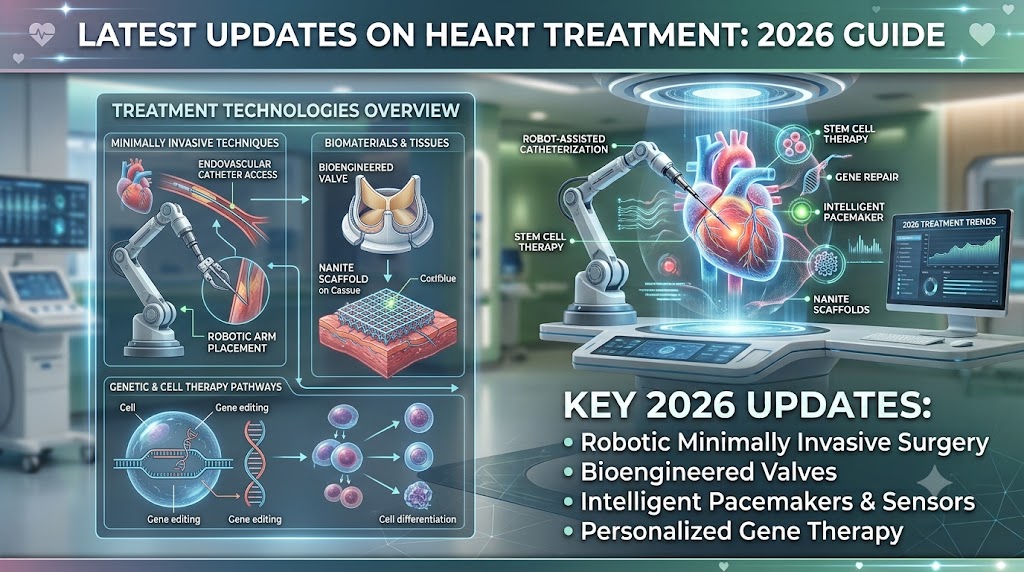
Latest Updates on Heart Treatment in Kolkata (2026 Guide)
Latest Updates on Heart Treatment in Kolkata (2026 Guide)
For decades, the phrase “heart surgery” brought to mind scary images: long hours in an operating room, large incisions down the chest, weeks spent in intensive care, and a long, painful road to recovery.
Today, the medical landscape has completely shifted. Kolkata has transformed into a major hub for cutting-edge, patient-friendly cardiac care in Eastern India. Leading heart specialists in the city are moving away from traditional, highly invasive open-heart surgeries. Instead, they are turning to microscopic incisions, state-of-the-art robotic arms, and smart, tailormade treatment plans.
If you or a loved one is navigating heart health in Kolkata, this detailed guide will walk you through the latest, safest treatment options available right at your doorstep.
1. The Game Changer: TAVI / TAVR
One of the most remarkable breakthroughs widely adopted across Kolkata’s top hospitals is TAVI (Transcatheter Aortic Valve Implantation), also frequently called TAVR (Transcatheter Aortic Valve Replacement).
What is TAVI / TAVR?
To understand TAVI, imagine your heart valve as a door that opens and closes to let blood pump out to the rest of your body. As people age, this door can become stiff and narrow due to calcium buildup—a dangerous condition called aortic stenosis.
Previously, replacing a faulty valve meant opening the chest bone (a sternotomy) and stopping the heart. TAVI completely bypasses this trauma.
Instead of a large incision, an interventional cardiologist makes a tiny puncture in the groin (the leg area). Using a thin, flexible tube called a catheter, the doctor threads a brand-new, collapsible heart valve through the blood vessels directly into the heart. Once in place, the new valve is expanded, immediately pushing the old, faulty valve out of the way and taking over its job.
[Tiny Groin Puncture] ➔ [Catheter Guided via Artery] ➔ [New Valve Expanded Inside Heart]
Why it Matters Today
- No Large Chest Incisions: The chest bone remains entirely untouched.
- Rapid Recovery: Most patients are awake shortly after the procedure and can walk out of the hospital within 48 to 72 hours.
- A Lifeline for High-Risk Patients: TAVI is a game changer for elderly patients or individuals with pre-existing conditions (like kidney disease or diabetes) who are considered too fragile for traditional surgery.
2. The Rise of Robotic Cardiac Surgery
Kolkata is experiencing a massive surge in the availability and success of robotic-assisted heart surgeries. Premier institutions across the city have established dedicated robotic wings, making highly precise procedures standard practice.
How Does Robotic Surgery Work?
It is a common myth that the robot operates on the patient independently. In reality, a highly skilled cardiac surgeon sits at a specialized computer console a few feet away from the operating table. The console provides a high-definition, 3-D, magnified view inside the patient’s chest.
When the surgeon moves their hands, advanced robotic arms mirror those movements with extreme precision inside the body. The robotic instruments can rotate and flex in ways that human wrists simply cannot, all through tiny ports that measure less than an inch.
Key Benefits over Traditional Open Surgery
Traditional open-heart surgery requires splitting the breastbone, which typically demands 6 to 12 weeks of recovery time. Robotic surgery bypasses this entirely, offering key clinical benefits:
- Minimal Blood Loss: The extreme precision means surrounding tissue is rarely disturbed.
- Virtually Invisible Scars: Punctures are as small as 4 cm, drastically lowering the risk of post-operative wound infections.
- Accelerated Healing: Patients routinely return to normal, everyday activities within 2 to 4 weeks.
3. Beyond Simple Angioplasty: CHIP and CTO Interventions
Angioplasty—using a tiny balloon and a wire mesh tube (stent) to open blocked heart arteries—has been around for a long time. However, until recently, if a patient had a long-standing, 100% hardened blockage, standard angioplasty would fail, leaving open-heart bypass surgery as the only alternative.
Kolkata’s top catheterization labs (Cath Labs) specialize in CHIP (Complex Higher-Risk and Indicated Patients) and CTO (Chronic Total Occlusion) interventions.
Using specialized micro-catheters and high-frequency sound waves inside the blood vessels (IVUS – Intravascular Ultrasound), cardiologists can safely drill through calcified, rock-hard blockages that have been present for years. This advanced technique allows doctors to restore healthy blood flow without a single surgical stitch.
4. Advanced Cardiac Device Therapies
For patients dealing with heart failure or irregular heartbeats (arrhythmias), device therapy in Kolkata has taken a massive step forward.
- Smart Pacemakers & ICDs: Modern pacemakers are incredibly small—some are the size of a large vitamin pill and are implanted directly inside the heart chamber without any external wires. They continuously monitor heart rhythms and can automatically transmit real-time data to a cardiologist’s clinic via a smartphone app.
- CRT-P / CRT-D (Cardiac Resynchronization Therapy): For individuals whose heart walls do not pump in perfect harmony, these specialized devices send tiny electrical impulses to both sides of the lower heart chambers. This resynchronizes the heartbeat, significantly improving quality of life and reducing fatigue for advanced heart failure patients.
Step-by-Step Guide: Navigating Heart Care in Kolkata
If you or a family member is experiencing heart issues, following a structured path ensures you get the right care quickly.
[Step 1: Primary Screening] ➔ [Step 2: Expert Consult] ➔ [Step 3: Multi-Specialty Review] ➔ [Step 4: Tailored Recovery]
1.Primary Screening and Detection: Immediate Action.
Do not ignore warning signs like unexpected chest tightness, sudden fatigue, shortness of breath, or erratic palpitations. Your first step should be consulting a general cardiologist for primary screenings, which typically include a basic ECG, a TMT (Treadmill Test), or an Echocardiogram (an ultrasound of the heart).
2.Consult an Interventional or Structural Specialist: Advanced Evaluation.
If screenings reveal a severe blockage or a damaged valve, ask for a referral to a specialist focused on advanced treatments. Modern structural specialists evaluate whether advanced, non-surgical options like TAVI or robotic interventions are viable for your specific anatomy.
3.The Heart Team Approach: Multi-Specialty Review.
Top Kolkata hospitals now utilize a “Heart Team” framework. Instead of a single doctor making the final call, a joint panel consisting of an interventional cardiologist, a cardiac surgeon, and an imaging expert reviews your files together. This collaborative approach balances surgical and non-surgical risks to give you the safest, unbiased treatment recommendation.
4.Tailored Post-Procedure Rehabilitation: Long-Term Recovery.
Treatment doesn’t end when you leave the procedure room. Modern heart care emphasizes specialized cardiac rehabilitation. This includes customized, low-impact exercise schedules, personalized dietary counseling adapted to local culinary habits, and stress-management techniques to keep your heart strong for decades.
Comparing Your Treatment Options in Kolkata
To help make sense of the choices available, here is a straightforward comparison of the primary advanced treatment methods used across the city today:
|
Feature / Criteria |
Traditional Open Surgery |
Robotic Cardiac Surgery |
TAVI / TAVR (Non-Surgical) |
|
Chest Bone Split? |
Yes (Full Sternotomy) |
No (Small 4cm ports) |
No (Groin puncture only) |
|
Typical Recovery Time |
6 to 12 weeks |
2 to 4 weeks |
2 to 3 days |
|
Anesthesia Used |
Deep General Anesthesia |
General Anesthesia |
Light Sedation / Local |
|
Ideal For |
Multiple complex blockages |
Valve repairs & single bypass |
High-risk, elderly valve patients |
|
Approximate Cost Range |
₹2,75,000 – ₹4,25,000 |
₹3,50,000 – ₹8,00,000 |
Variable based on valve type |
A Vital Health Note: While advanced technology offers safer alternatives, prevention remains the best approach. Annual health check-ups, managing high blood pressure, and addressing sedentary habits are critical for long-term heart health.