Advanced Interventional Cardiology Treatments
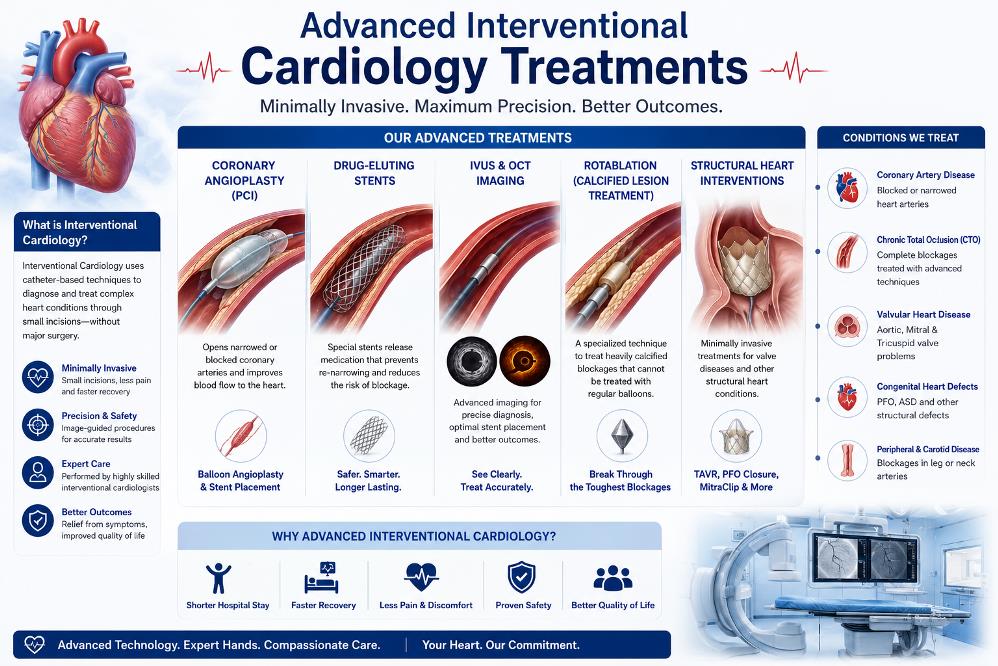
Specialized, minimally invasive catheter-based procedures used for the accurate diagnosis and treatment of cardiovascular diseases.
Advanced Interventional Cardiology Treatments in Kolkata, India
Expert Minimally Invasive Heart Care with Dr. Ayan Kar
When you or a loved one are facing a heart condition, the thought of medical procedures can feel overwhelming, scary, and confusing. For decades, treating heart blockages and valve issues meant traditional open-heart surgery, long hospital stays, and painful recoveries.
Today, the landscape of heart care has completely transformed. Thanks to Interventional Cardiology, treating complex cardiovascular diseases is safer, faster, and far less painful.
Led by Dr. Ayan Kar, our clinic specializes in advanced, minimally invasive catheter-based procedures for diagnosing and treating cardiovascular diseases. We believe that world-class medical care should not only save lives but also protect your quality of life. Our goal is to fix the problem from the inside out, helping you return to your family, your work, and your passions as quickly as possible.
This comprehensive guide will explain everything you need to know about interventional cardiology, the specific treatments we offer, and exactly what you can expect during your journey to better heart health.
What is Interventional Cardiology? (Explained Simply)
To understand interventional cardiology, it helps to think of the human heart as a house with a complex plumbing system (blood vessels and arteries) and mechanical doors (heart valves). Over time, the pipes can get clogged with buildup, or the doors might become stiff and refuse to open properly.
In the past, the only way to fix these issues was to “tear down the wall”—meaning open-heart surgery, where the chest is physically opened to access the heart.
Interventional cardiology is the modern way to fix the plumbing without tearing down the walls.
Instead of large surgical incisions, Dr. Ayan Kar uses a catheter—a long, thin, flexible hollow tube about the width of a spaghetti noodle. This catheter is gently inserted into a blood vessel in your wrist or groin through a tiny pinhole puncture. Using advanced real-time X-ray imaging (called fluoroscopy), Dr. Kar carefully guides this tube through your blood vessels directly to your heart.
Once the catheter reaches the heart, specialized microscopic tools—like tiny balloons, stents, or even replacement valves—can be passed through the tube to diagnose and permanently treat the problem.
Because there are no large cuts, no broken bones, and often no need for general anesthesia (you are simply relaxed but awake), the body experiences significantly less trauma.
Why Choose Minimally Invasive Heart Treatments?
If you are a candidate for interventional cardiology, the benefits over traditional surgery are life-changing:
No Large Scars: The entry point is literally the size of a pen tip. It usually heals with just a small bandage.
Less Pain: Because we aren’t cutting through muscle or bone, post-procedure pain is dramatically reduced.
Shorter Hospital Stays: Many of our procedures are done on a day-care basis. You might walk into the hospital in the morning and go home the very same evening or the next day.
Faster Recovery Time: Instead of spending months recovering in bed, most patients return to normal light activities within a few days.
Lower Risk of Infection: Smaller wounds mean a drastically reduced chance of hospital-acquired infections.
Local Anesthesia: Most procedures only require local numbing at the wrist or groin and a mild sedative to keep you relaxed. This avoids the heavy risks associated with general anesthesia.
Core Interventional Cardiology Treatments Offered by Dr. Ayan Kar
Dr. Ayan Kar utilizes state-of-the-art technology to offer a wide spectrum of diagnostic and therapeutic procedures. Here is a detailed, easy-to-understand breakdown of the life-saving treatments we provide.
1. Coronary Angiography (The Diagnostic Blueprint)
Before we can fix a problem, we need to know exactly where it is. A Coronary Angiogram is the gold standard test for diagnosing blockages in your heart’s arteries.
How it works: Dr. Kar guides a catheter to the base of your heart. A special, safe contrast dye is injected through the tube into your coronary arteries.
What we see: As the dye flows, an X-ray camera records a video. If there is a blockage (plaque buildup) stopping the blood flow, the dye will show exactly where the “traffic jam” is located and how severe it is.
Why it matters: This provides a flawless roadmap, allowing Dr. Kar to tell you precisely what is wrong and immediately plan the best way to fix it.
2. Coronary Angioplasty and Stenting (Clearing the Blockages)
If an angiography reveals that an artery is dangerously blocked or narrowed, Angioplasty (also known as Percutaneous Coronary Intervention, or PCI) is performed to open it up and restore healthy blood flow.
The Balloon Phase: A specialized catheter with a tiny, deflated balloon at its tip is navigated directly inside the blockage. Once in position, the balloon is gently inflated. This pushes the hardened plaque outward against the artery walls, instantly widening the pathway for blood to flow.
The Stent Placement: To prevent the artery from simply collapsing back down once the balloon is removed, Dr. Kar will place a stent. A stent is a tiny, expandable wire mesh tube. It acts like a scaffold, holding the artery open permanently.
Drug-Eluting Stents: Dr. Kar uses advanced drug-eluting stents. These modern stents are coated with a slow-release medication that prevents scar tissue from growing over the mesh, ensuring the artery stays clear and open for years to come.
3. Primary Angioplasty (Emergency Heart Attack Treatment)
When a patient is suffering a severe heart attack (STEMI), a blood clot has completely blocked an artery, and heart muscle is actively dying. Time is of the essence.
Primary angioplasty is an emergency version of the balloon and stent procedure. Dr. Kar and the emergency team work rapidly to open the blocked artery, usually within minutes of the patient arriving at the hospital. This procedure stops the heart attack in its tracks and saves the patient’s life.
4. Transcatheter Aortic Valve Replacement (TAVR / TAVI)
As we age, the aortic valve (the main door pumping blood out of the heart) can become stiff, calcified, and narrow—a condition called Aortic Stenosis. Historically, replacing this valve required cracking the chest open.
The Modern Solution: TAVR allows Dr. Kar to deliver a brand-new, fully functioning biological valve through a catheter in the groin. The new valve is squeezed down into the catheter, pushed up to the heart, and expanded directly inside the old, failing valve. It immediately takes over the job of regulating blood flow.
The Impact: This is a miracle procedure for elderly patients or those considered too high-risk for open-heart surgery, giving them a new lease on life with minimal recovery time.
5. Rotablation (Atherectomy for Hardened Arteries)
Sometimes, the plaque blocking an artery is heavily calcified—meaning it has turned as hard as bone or rock. A standard angioplasty balloon cannot push it open; in fact, the balloon might pop.
How it works: Dr. Kar uses Rotablation. A catheter equipped with a microscopic, diamond-coated drill bit is sent to the blockage. Spinning at ultra-high speeds, it gently sands away the rock-hard calcium into microscopic particles that are safely washed away by the bloodstream. Once the calcium is cleared, a standard stent can be safely placed.
6. Pacemaker Implantation
If your heart’s natural electrical system is failing—causing your heart to beat dangerously slow or skip beats—you may experience dizziness, fainting, or extreme fatigue.
The Fix: Dr. Kar implants a pacemaker, a small device placed just under the skin near the collarbone. Thin wires (leads) are guided through a vein into the heart muscle. The pacemaker constantly monitors your heart rhythm and sends tiny, painless electrical pulses to keep your heart beating at a normal, healthy pace.
The Patient Journey: A Step-by-Step Guide
We understand that the fear of the unknown is often the most stressful part of medical care. To give you peace of mind, here is exactly what you can expect when you undergo an interventional cardiology treatment with Dr. Ayan Kar.
Step 1: The Initial Consultation
Your journey begins with a thorough, unhurried consultation. Dr. Kar will review your medical history, listen to your symptoms (such as chest pain, shortness of breath, or fatigue), and review previous tests like ECGs or Echo scans. He will explain your condition in simple, everyday language and discuss whether a catheter-based procedure is the right choice for you.
Step 2: Pre-Procedure Preparation
If a procedure is scheduled, our team will give you clear instructions. You will typically be asked to fast (not eat or drink) for 6 to 8 hours before the procedure. We will also manage your current medications, telling you exactly which ones to take and which to skip (like blood thinners) on the morning of the procedure.
Step 3: Arriving at the Cath Lab
On the day of your treatment, you will be taken to the Cardiac Catheterization Laboratory (Cath Lab). It looks like a modern operating room filled with computer screens and advanced X-ray equipment. The environment is kept cool and sterile. Our friendly nursing staff will connect you to monitors to track your heart rate, blood pressure, and oxygen levels. You will be given a mild sedative through an IV line. You won’t be put deeply to sleep; you will simply feel deeply relaxed, drowsy, and completely pain-free.
Step 4: The Procedure
Dr. Kar will clean and sterilize the area where the catheter will be inserted—usually the right wrist (radial artery) or sometimes the groin (femoral artery).
Numbing: A local anesthetic is injected into the skin. You will feel a tiny pinch, and then the area will go completely numb.
Insertion: A small plastic sheath (a gateway) is placed into the artery. You will feel no pain, only a slight pressure.
Navigation: The catheter is threaded up to your heart. Because there are no nerve endings inside your blood vessels, you cannot feel the tube moving inside your body.
Treatment: Dr. Kar performs the angiography, angioplasty, or valve replacement while watching the X-ray monitors. If a stent is placed, you might feel a brief, mild pressure in your chest for a few seconds—this is normal.
Step 5: Immediate Aftercare
Once the problem is fixed, the catheter is gently removed. If the entry was in your wrist, a tight, comfortable pressure band (called a TR band) is placed around it like a watch to stop any bleeding. If the entry was in your groin, a tiny collagen plug or pressure is applied. You will be moved to a comfortable recovery room where nurses will monitor you for a few hours.
Step 6: Going Home
If you had a diagnostic angiogram, you will likely go home the same day. If you had a stent placed, you might stay overnight for observation and head home the next morning. Before you leave, Dr. Kar will show you the “before and after” videos of your heart, explaining exactly what was fixed. You will be given a clear list of medications and simple discharge instructions.
Recognizing the Warning Signs: Do You Need a Cardiologist?
Cardiovascular disease is often called a silent killer because it can build up over years without causing trouble. However, when the blockages become severe, your body will send out warning signals.
You should schedule a consultation with Dr. Ayan Kar immediately if you experience any of the following symptoms:
Angina (Chest Pain): A feeling of heaviness, squeezing, tightness, or burning in the center or left side of your chest. It often worsens with physical exertion and gets better with rest.
Shortness of Breath: Feeling winded or unable to catch your breath from simple activities like walking up a short flight of stairs.
Radiating Pain: Discomfort that spreads from your chest to your left arm, jaw, neck, or back.
Unexplained Fatigue: Feeling constantly exhausted, even after resting, as your heart struggles to pump enough oxygen-rich blood.
Dizziness or Palpitations: Feeling lightheaded, dizzy, or noticing that your heart is fluttering, racing, or skipping beats.
Note: If you experience sudden, severe chest pain accompanied by sweating and nausea, this is a medical emergency. Call emergency services immediately.
Life After the Procedure: Protecting Your New Stent
An interventional procedure fixes the immediate blockage, but it does not cure the underlying disease that caused the plaque buildup in the first place. To ensure long-lasting success and keep your heart healthy, Dr. Kar emphasizes a partnership in post-procedure care.
Take Your Medications Religiously: You will be prescribed antiplatelet medications (blood thinners like Aspirin and Clopidogrel). These are absolutely vital to prevent blood clots from forming on your new metal stent while it heals. Never stop taking these without consulting Dr. Kar.
Dietary Changes: Shift towards a heart-healthy diet. Focus on whole grains, fresh vegetables, lean proteins, and healthy fats (like olive oil). Reduce salt, deep-fried foods, and processed sugars.
Active Lifestyle: Once cleared by Dr. Kar (usually after a week or two), begin a moderate exercise routine. A brisk 30-minute walk every day does wonders for cardiovascular health.
Quit Smoking: Smoking accelerates plaque buildup faster than almost anything else. Quitting is mandatory to protect your heart’s future.
Routine Follow-ups: Keep your scheduled appointments so we can monitor your progress, adjust your medications, and ensure your heart is performing optimally.
Areas of Treatments:
Book Your Consultation with Dr. Ayan Kar
Don't wait for your symptoms to worsen. Early intervention is the key to successful heart failure management. Contact our clinic today to schedule a comprehensive cardiovascular evaluation and take the first step toward a stronger, healthier heart.
Call NowGet an AppoinmentFrequently Asked Questions (FAQs)
Q: Is an angiogram painful?
No. The only discomfort you will feel is a small pinch when the local anesthetic is injected into your wrist or groin to numb the skin. Once the area is numb, the rest of the procedure is virtually painless. You will not feel the catheter moving inside your body.
Q: How long does an angioplasty take?
A standard diagnostic angiogram takes about 15 to 20 minutes. If Dr. Kar proceeds with an angioplasty and places a stent, the total procedure usually takes between 45 minutes to an hour.
Q: What is a stent made of, and will I set off metal detectors at the airport?
Modern stents are made of advanced surgical-grade medical alloys (like cobalt-chromium or platinum-chromium). They are incredibly small and will not set off airport security metal detectors. You also do not need to worry about MRI machines, as most modern stents are MRI-safe (though you should always inform the technician).
Q: Are you awake during the procedure?
Yes. General anesthesia (being completely knocked out with a breathing tube) is rarely used in interventional cardiology. You will be given “conscious sedation.” This means you are awake, able to talk to the doctor, and breathing on your own, but you will feel deeply relaxed and stress-free.
Q: Why does Dr. Kar prefer going through the wrist instead of the groin?
Whenever medically possible, Dr. Kar prefers the “transradial approach” (going through the wrist). It is much more comfortable for the patient, allows you to sit up and walk almost immediately after the procedure, and significantly reduces the risk of post-procedure bleeding compared to the groin approach.
Q: How soon can I go back to work after a stent?
If you have a desk job, you can usually return to work within 3 to 5 days after a planned stent procedure. For jobs requiring heavy lifting or strenuous manual labor, Dr. Kar will advise you on a specific timeline, usually requiring a few weeks of rest.
Q: Can a stent get blocked again?
While modern drug-eluting stents have very low rates of re-blockage (restenosis), it is still possible if lifestyle changes are not made. Taking your prescribed blood thinners, managing your cholesterol, controlling diabetes, and quitting smoking are the best ways to ensure your stent stays open forever.
Q: Is Interventional Cardiology safe for elderly patients?
Absolutely. In fact, minimally invasive catheter procedures are often the only safe option for elderly patients who are too frail to survive the trauma of traditional open-heart surgery. Procedures like TAVR were specifically designed for older, high-risk demographics.
Schedule Your Consultation Today
Don’t wait for a heart condition to turn into an emergency. If you are experiencing symptoms, have been diagnosed with a blockage, or want a second opinion on your cardiovascular health, expert help is available.
Under the expert care of Dr. Ayan Kar, you have access to the world’s most advanced, minimally invasive interventional cardiology treatments. Combining cutting-edge technology with deep compassionate care, we are here to protect your heart and get you back to the life you love.
Book Your Consultation with Dr. Ayan Kar
Don't wait for your symptoms to worsen. Early intervention is the key to successful heart failure management. Contact our clinic today to schedule a comprehensive cardiovascular evaluation and take the first step toward a stronger, healthier heart.
Call NowGet an Appoinment